
Types of Shot Blasting Machines: The 2026 Buying Guide

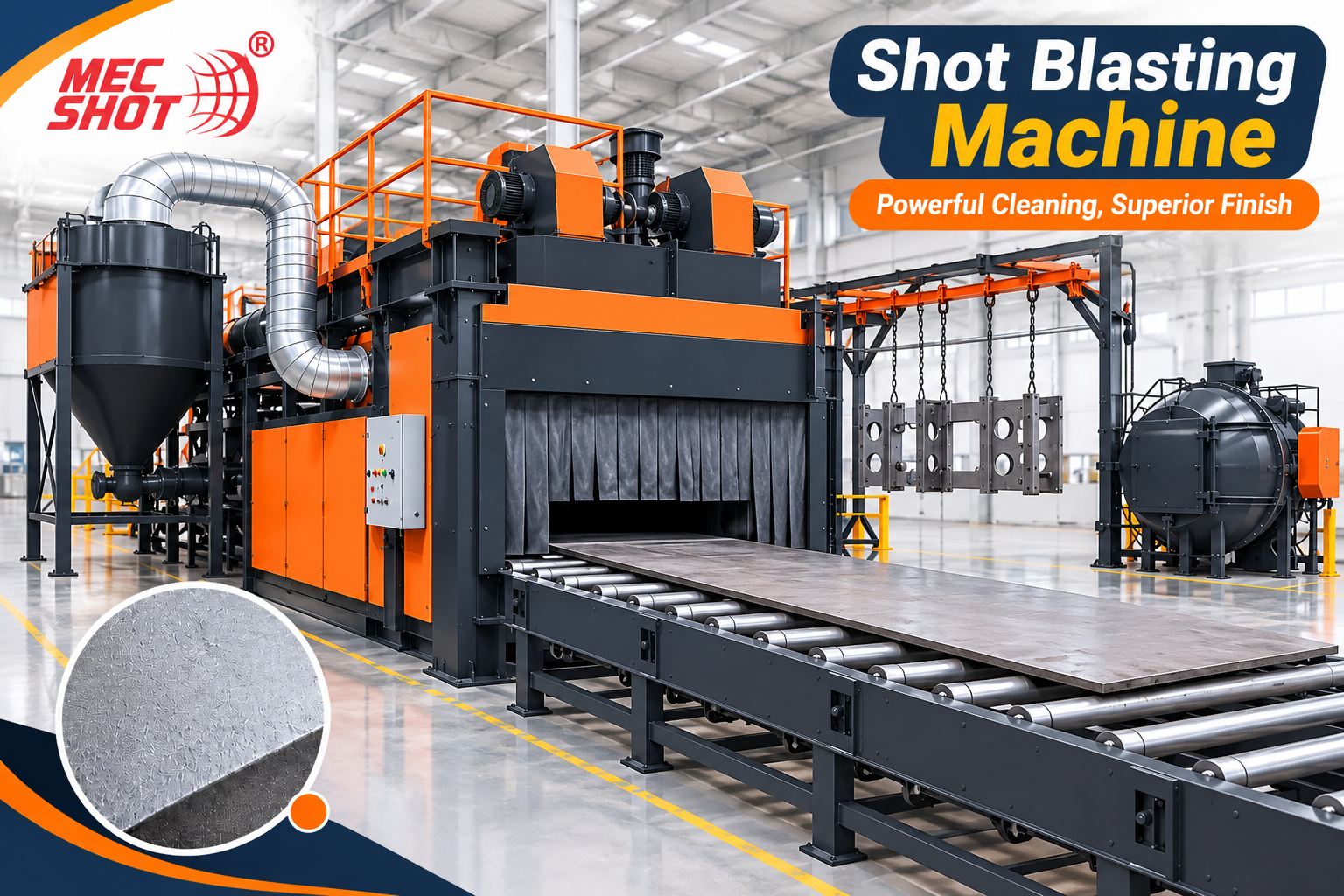
Different industrial components require different surface preparation methods. Small castings, heavy engineering parts, steel plates, and fabricated structures cannot always be processed using the same equipment.
Choosing the right machine depends on component size, shape, production volume, and required surface finish. Understanding the types of shot blasting machine available helps manufacturers select equipment that fits their actual production needs.
Main Categories of Shot Blasting Machines
Industrial blasting equipment generally uses two technologies:
Airless or wheel blasting: Rotating blast wheels accelerate abrasive towards the workpiece. Commonly used in production environments.
Air-operated blasting: Compressed air propels abrasive through a nozzle. Suitable for flexible operations and large structures.
Each technology offers different machine configurations.
Types of Airless / Wheel Shot Blasting Machines
1. Tumblast Shot Blasting Machine
A tumblast machine rotates components inside a tumbling chamber, exposing their surfaces to abrasive during processing.
Applications: Small castings, forged parts, automotive components, and metal hardware.
Best suited for: Batch processing of components that can safely tumble without damage..
2. Hanger-Type Shot Blasting Machine
This machine suspends components from hooks or fixtures while blast wheels clean their surfaces. It avoids the part-to-part contact associated with tumbling systems.
Applications: Heavy castings, fabricated structures, automotive components, and irregular workpieces.
Best suited for: Parts requiring individual support during blasting.
MEC SHOT offers hanger arrangements including T-hanger, Y-hanger, indexing hanger, monorail, and close-loop configurations.
3. Swing Table Shot Blasting Machine
A swing table machine holds components on a supported table arrangement. Table movement helps expose different workpiece surfaces to the abrasive stream.
Applications: Heavy castings and engineering components.
Best suited for: Workpieces that require stable support and cannot be processed through tumbling.
4. Rotary Table Shot Blasting Machine
A rotary table machine positions components on a rotating worktable. As the table turns, different areas of the workpiece receive abrasive exposure.
Applications: Disc-shaped parts, machine components, and suitable heavy engineering workpieces.
Best suited for: Components requiring controlled positioning during batch processing.
Swing table vs. rotary table: Their movement arrangements can differ. Confirm whether the table rotates, swings, or indexes before selecting a machine.
5. Roller Conveyor Shot Blasting Machine
Roller conveyor machines move components through a blasting chamber using powered rollers. Blast wheels treat the required surfaces as the material passes through.
Applications:
Steel plates and sheets
Structural beams and channels
Pipes and fabricated sections
Heavy steel profiles
Best suited for: Continuous processing of long or flat metal products.
6. Mesh Belt Shot Blasting Machine
A mesh belt machine carries components through the blasting chamber on a moving metal mesh conveyor. Its open design allows abrasive to reach exposed surfaces.
Applications: Suitable small castings, automotive components, and lightweight metal parts.
Best suited for: Continuous processing of components that remain stable on a moving mesh belt.
Mesh belt and roller conveyor machines have different workpiece handling arrangements. Mesh belt equipment is discussed here as a general industrial category, not as a confirmed MEC SHOT catalogue product.
Types of Air-Operated Blasting Machines
1. Portable Abrasive Blasting Machine
Portable machines can be moved to the work location, making them useful when large components cannot be transported to fixed blasting equipment.
Applications: Steel structures, fabrication yards, industrial maintenance, and on-site surface preparation.
2. Abrasive Blasting Cabinet
A blasting cabinet provides an enclosed workspace for cleaning smaller components. Operators control blasting through built-in gloves.
Applications: Small metal parts, tools, and maintenance components.
Best suited for: Controlled processing of workpieces that fit inside the cabinet.
3. Industrial Blast Room
A blast room is a dedicated enclosure industrial blast room systems for preparing large components and fabricated structures. Depending on its configuration, it may include abrasive recovery, separation equipment, and dust collection.
Applications: Heavy fabrication, large steel structures, railway components, and industrial maintenance.
Shot Blasting Machine Comparison
Machine Type | Typical Application | Handling |
Tumblast | Small suitable components | Batch tumbling |
Hanger | Large or irregular parts | Suspended |
Swing table | Heavy components | Supported table |
Rotary table | Positioned components | Rotating table |
Roller conveyor | Plates and structural sections | Continuous rollers |
Mesh belt | Suitable smaller parts | Moving mesh |
Portable blaster | On-site work | Manual |
Blasting cabinet | Small components | Enclosed |
Blast room | Large structures | Walk-in enclosure |
How to Select the Right Shot Blasting Machine
Before purchasing equipment, evaluate these requirements:
Component dimensions and weight: Confirm maximum workpiece size and loading capacity.
Component geometry: Determine whether parts can tumble, hang, or need table support.
Production volume: Identify whether batch or continuous processing is required.
Surface finish: Define the required cleanliness and surface profile for subsequent operations.
Abrasive management: Consider media selection, separation, recovery, and replacement.
Dust collection: Include suitable extraction and filtration arrangements.
Factory layout: Check installation space, material movement, and maintenance access.
These details help manufacturers recommend equipment based on the actual application rather than general machine categories.
MEC SHOT Industrial Blasting Equipment
MEC SHOT Blasting Equipments Pvt. Ltd. manufactures industrial surface preparation and finishing equipment. Its published range includes air-operated and airless shot blasting machines, tumblast systems, hanger-type machines, swing table equipment, blast rooms, and dust collectors.
Conclusion
Every shot blasting machine is designed around specific workpiece and production requirements. Tumblast systems handle suitable batch components, hanger machines support suspended workpieces, table machines provide controlled positioning, and conveyor systems support continuous processing.
The right investment starts with understanding your component dimensions, production target, and surface preparation requirements. Evaluating these factors before purchasing helps identify equipment that fits your manufacturing process.
Frequently Asked Questions
1. What are the common types of shot blasting machines?
Common types include tumblast, hanger, swing table, rotary table, roller conveyor, and specialised continuous machines. Air-operated options include portable blasters, cabinets, and blast rooms.
2. Which machine is suitable for small metal castings?
A tumblast machine may be suitable when castings can safely tumble together without damage. Component size, shape, and production volume should be checked first.
3. What is the difference between tumblast and hanger machines?
Tumblast machines process suitable components inside a rotating chamber, while hanger machines suspend workpieces individually during blasting.
4. What is a roller conveyor shot blasting machine used for?
It is commonly used for processing steel plates, beams, channels, pipes, and other suitable long metal products.
5. When is portable abrasive blasting equipment required?
It is useful when large structures or equipment cannot easily be transported to a fixed blasting installation.
6. How do I choose the right shot blasting machine?
Consider component dimensions, weight, geometry, production volume, required surface finish, abrasive requirements, and factory layout.
7. Does MEC SHOT offer different blasting machine configurations?
MEC SHOT's published product range includes air-operated and airless machines, tumblast, hanger-type, swing table equipment, blast rooms, and dust collectors.