
Shot Blasting Machine Cost Guide 2027 (USD)

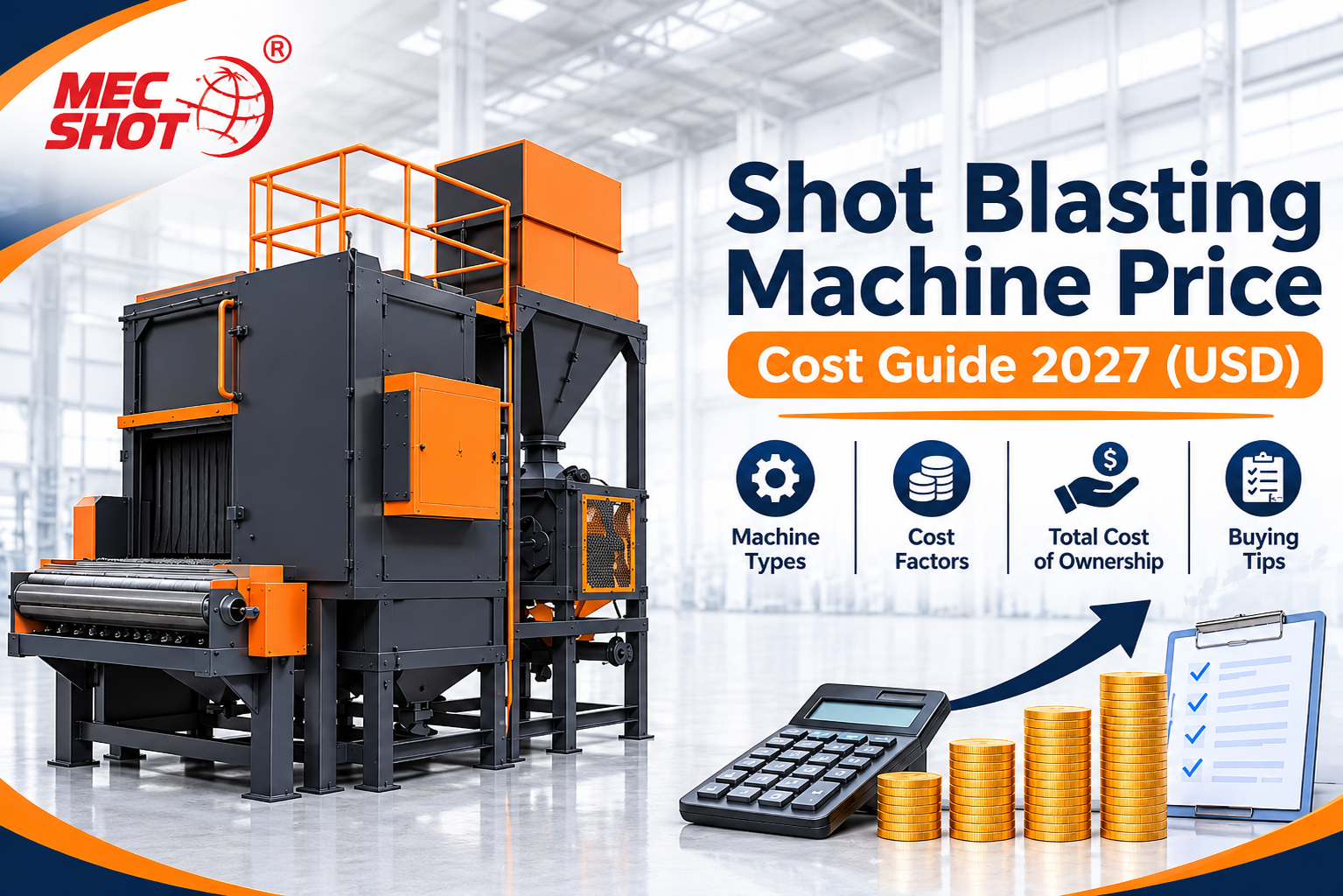
The cost of a shot blasting machine in 2027 depends on machine type, workpiece size, production capacity, automation, and surface preparation requirements. A compact batch machine and an automated roller conveyor system involve very different investments.
For industrial buyers, selecting equipment based only on its purchase price can lead to higher operating costs or an unsuitable production setup. This guide covers indicative machine prices, major cost factors, and what to consider before requesting a quotation.
Shot Blasting Machine Price in 2027 (USD)
The following ranges provide an initial budget reference for commonly used industrial blasting equipment.
Machine Type | Indicative Price Range (USD) |
Abrasive blasting cabinet | 1,000–5,000 |
Industrial pressure blasting cabinet | 2,500–20,000 |
Tumblast shot blasting machine | 5,000–27,000 |
Hanger-type shot blasting machine | 7,000–30,000 |
Rotary table shot blasting machine | 8,000–30,000 |
Roller conveyor shot blasting machine | 9,500–50,000+ |
Industrial blast room system | 18,000–90,000+ |
Customized automatic blasting line | Project-specific quotation |
These are broad planning estimates, not standardized market prices. A basic machine may exclude dust collection, abrasive recovery, installation, and electrical controls. Always compare the complete scope of supply.
Price by Shot Blasting Machine Type
The right machine depends on component geometry, production volume, and the required surface finish.
Tumblast Shot Blasting Machine
Tumblast machine is designed for batch processing of small and medium-sized components. Parts rotate inside a suitable tumblast machine arrangement while abrasive cleans their surfaces.
Common applications include castings, automotive parts, forged components, and metal hardware. Price depends on batch capacity, chamber design, blast wheel configuration, and abrasive handling equipment.
Hanger-Type Shot Blasting Machine
This machine suspends components from hooks during blasting. It is suitable for large, heavy, or irregularly shaped parts that should not tumble.
Its cost depends on hook capacity, chamber dimensions, blast wheel arrangement, and loading configuration.
Rotary Table Shot Blasting Machine
Rotary table machines hold components in a fixed position while the table rotates during blasting. They are useful for heavy engineering parts, castings, and components requiring controlled positioning.
Table size, load capacity, and blast wheel configuration influence the investment.
Roller Conveyor Shot Blasting Machine
Designed for continuous processing, roller conveyor machines are commonly used for steel plates, beams, pipes, and structural sections.
Their cost depends on working dimensions, conveyor speed, blast wheel quantity, abrasive recovery, dust collection, and automation.
Air-Operated Blasting Equipment
Air-operated machines use compressed air to propel abrasive through a nozzle. Options include pressure blasting machines, cabinets, portable equipment, and blast rooms.
The sand blasting machine price depends on pressure capacity, compressor requirements, nozzle arrangement, enclosure, and abrasive recovery.
What Factors Affect Shot Blasting Machine Price?
Two machines of the same category can have significantly different prices. The main reasons include:
Workpiece dimensions and weight:
Larger components require bigger chambers, stronger handling arrangements, and potentially more blast wheels.
Production capacity:
Batch size, hourly throughput, operating shifts, and cycle time determine the required machine configuration.
Blast wheel arrangement:
The number, power, and positioning of blast wheels influence coverage, processing time, and equipment cost.
Automation:
Automatic loading, unloading, conveyor systems, and PLC controls increase initial investment but may improve production consistency.
Abrasive recovery:
Elevators, separators, storage systems, and media circulation arrangements affect the overall project cost.
Dust collection:
Industrial dust collectors, filters, and ducting are important parts of a complete blasting installation.
Wear protection:
Chamber liners and replaceable components influence equipment durability and maintenance expenses.
The best investment is a machine sized for the actual application, not simply the machine with the highest capacity.
Additional Costs Beyond the Machine Price
The machine purchase price may not include everything required for installation and operation.
Cost Component | What to Consider |
Transportation | Freight, packaging, and delivery |
Import charges | Applicable customs duties and taxes |
Installation | Mechanical and electrical work |
Foundation | Civil work and floor requirements |
Utilities | Electrical supply and compressed air, where needed |
Abrasive media | Initial filling and replacement |
Dust collection | Filters, ducting, and maintenance |
Spare parts | Wear components and recommended spares |
Request an itemized quotation to identify additional costs before finalizing the investment.
How to Evaluate the Total Cost of Ownership
The initial purchase price does not represent the complete cost of operating a machine.
Consider these ongoing expenses:
Energy: Power consumed by blast wheels, conveyors, dust collectors, and other equipment.
Abrasive: Media consumption, recovery efficiency, and replacement frequency.
Maintenance: Wear liners, blast wheel components, filters, belts, and other spare parts.
Labour: Loading, unloading, inspection, and process supervision.
Downtime: Production losses caused by maintenance or equipment breakdown.
Comparing the estimated cost per operating hour or processed component can help identify which machine offers better long-term value.
How to Select the Right Machine for Your Budget
Before requesting a quotation, prepare the following information:
Workpiece material, dimensions, and maximum weight.
Required batch size or hourly production.
Surface cleanliness and finish requirements.
Preferred machine type, if known.
Manual, semi-automatic, or automatic operation.
Available factory space and utility connections.
Abrasive recovery and dust collection requirements.
Providing these details helps the manufacturer recommend a suitable configuration instead of offering a generic price.
MEC SHOT Industrial Blasting Solutions
MEC SHOT Blasting Equipments Pvt. Ltd., established in 1992, manufactures industrial surface preparation and finishing equipment.
Its product range includes:
Air-operated shot blasting machines
Airless or wheel shot blasting machines
Tumblast and hanger-type machines
Rotary table and roller conveyor systems
Shot peening machines
Blast room systems
Industrial dust collectors
The appropriate configuration depends on component specifications, production requirements, and factory conditions.
Conclusion
The shot blasting machine price in 2027 depends on machine configuration, production capacity, automation, and supporting equipment. A batch machine, a continuous conveyor system, and an air-operated blasting setup serve different industrial requirements.
Rather than choosing the lowest-priced option, evaluate the complete system, operating expenses, maintenance requirements, and expected production output.
For a suitable machine recommendation, share your component details and production requirements with MEC SHOT.
Frequently Asked Questions
1. What is the average shot blasting machine price in 2027?
Prices vary by machine type and configuration. Basic industrial batch machines may start around $5,000, while larger conveyor systems can cost $50,000 or more. Customized installations require individual quotations.
2. What determines the cost of a shot blasting machine?
Machine size, production capacity, blast wheel configuration, automation, abrasive recovery, dust collection, and construction materials are major cost factors.
3. What is the difference between shot blasting and sand blasting machine prices?
Wheel blasting machines use rotating blast wheels, whereas air-operated blasting machines use compressed air and nozzles. Their equipment and utility requirements differ, so their prices are not directly comparable.
4. Which machine is suitable for small metal components?
Tumblast machines are commonly used for batch processing of small and medium-sized components. Selection depends on component dimensions, weight, material, and production volume.
5. Why do roller conveyor machines cost more?
They are designed for continuous processing and may require multiple blast wheels, conveyors, abrasive recovery, dust collection, and automated controls.
6. Does the machine price include installation?
Not always. Installation, transportation, foundation work, dust collection, electrical controls, and commissioning may be quoted separately.
7. How can I reduce shot blasting machine operating costs?
Choose the correct machine capacity, use suitable abrasive media, maintain wear components, and monitor energy consumption, abrasive recovery, and production downtime.
8. How can I get a quotation from MEC SHOT?
Share your component dimensions, material, weight, production capacity, surface finish requirements, and installation location with MEC SHOT to discuss a suitable machine configuration.