
What Is Shot Blasting? Process, Benefits and Where It Is Used

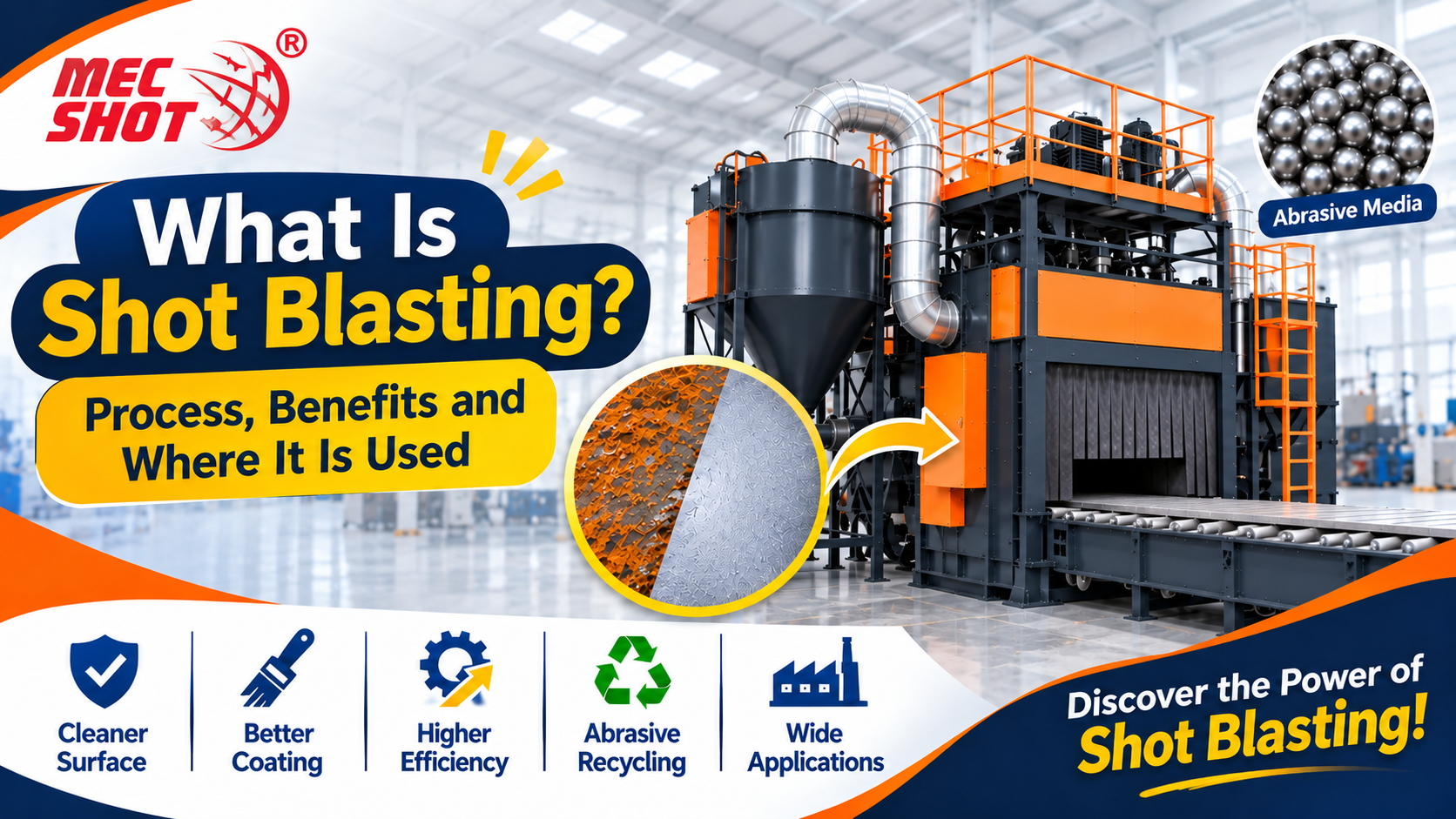
Metal components often develop rust, mill scale, casting residue, and surface contaminants during manufacturing or storage. These unwanted materials can affect coating quality and the performance of subsequent production operations.
Shot blasting is an industrial surface treatment method that removes these contaminants by projecting abrasive particles against a workpiece at controlled velocity. It creates a cleaner, more uniform surface for further processing.
This article explains what is shot blasting, how the process works, its main advantages, and where industries use it.
What Is Shot Blasting?
Shot blasting is a mechanical surface preparation process in which abrasive particles strike a component to remove unwanted surface material or produce a required surface texture.
Depending on the application, the abrasive may be propelled using a rotating blast wheel or compressed air.
Common abrasive materials include:
Steel shot: Rounded particles commonly used for cleaning and peening applications.
Steel grit: Angular particles used where a more aggressive cleaning action and surface profile are required.
Non-metallic abrasives: Selected for applications where the workpiece material or finishing requirement calls for alternative media.
The abrasive must be selected according to the component material, contamination, and desired surface condition.
How Does the Shot Blasting Process Work?
An industrial shot blasting operation generally involves four stages.
1. Component Loading
The workpiece is placed inside a blasting machine, mounted on a hanger, positioned on a table, or moved through a conveyor system.
2. Abrasive Projection
Blast wheels or compressed-air nozzles propel abrasive particles towards the component. Their impact removes rust, scale, sand, and other unwanted surface deposits.
3. Abrasive Collection and Separation
In machines equipped with recovery systems, used abrasive is collected and separated from dust and unwanted particles. Suitable media is returned to the blasting circuit.
4. Surface Inspection
The treated component is checked for cleanliness and the required surface condition. If it will receive a coating, the surface should meet the applicable preparation specification.
The exact process arrangement depends on the machine design and application.
What Are the Main Advantages of Shot Blasting?
The advantages of shot blasting extend beyond removing visible dirt from metal surfaces.
1. Effective surface cleaning: Removes rust, mill scale, foundry sand, and other surface contaminants.
2. Better coating preparation: Produces a suitable surface profile that can improve the mechanical adhesion of protective coatings when the process is correctly specified.
3. Consistent treatment: Mechanised equipment can provide repeatable results across production batches when operating conditions are controlled.
4. Improved production efficiency: Automated blasting systems reduce dependence on manual surface cleaning for suitable high-volume applications.
5. Abrasive recycling: Recovery and separation systems allow reusable abrasive to circulate through the machine, helping manage media consumption.
6. Flexible applications: Different machine configurations can process small components, heavy castings, fabricated structures, and long steel products.
Where Is Shot Blasting Used?
Shot blasting is used across industries where metal surfaces require cleaning or preparation before further manufacturing operations.
Steel Fabrication
Preparing plates, beams, channels, and fabricated structures for protective coating.
Railways and Heavy Engineering
Cleaning suitable mechanical parts and fabricated components used in demanding industrial applications.
Mining and Construction Equipment
Preparing pumps, drills, pipes, and other equipment components for maintenance or further treatment.
Aerospace and Specialised Engineering
Using application-specific surface treatment and, where required, controlled shot peening processes.
What Types of Shot Blasting Equipment Are Used?
Machine configuration depends on the workpiece and production method.
Tumblast machines: Process suitable small components in batches.
Hanger-type machines: Hold individual components during blasting.
Roller conveyor machines: Move suitable steel products through a blasting chamber.
Swing table machines: Support components that require table-based handling.
Abrasive blasting cabinets: Provide enclosed manual blasting for smaller workpieces.
Blast room systems: Accommodate large structures Blast room systems that cannot be processed in conventional machine chambers.
Why Are Dust Collection and Abrasive Recovery Important?
Blasting produces dust, broken abrasive, and removed surface contaminants. Without suitable collection and separation arrangements, these materials can affect equipment operation and the working environment.
An industrial installation may include:
Abrasive recovery conveyors
Bucket elevators
Abrasive separators
Storage and circulation arrangements
Industrial dust collectors
These systems help maintain abrasive quality and manage dust generated during operation. Suitable enclosure, extraction, and operator protection are also essential parts of responsible blasting practice.
MEC SHOT Surface Preparation Solutions
MEC SHOT Blasting Equipments Pvt. Ltd., established in 1992, manufactures industrial surface preparation and finishing equipment from Jodhpur, Rajasthan.
Its published range includes air-operated and airless shot blasting machines, shot peening systems, blast rooms, vacuum blasting equipment, and industrial dust collectors.
For manufacturers, the right equipment begins with understanding the component, the required surface condition, and the production process.
Frequently Asked Questions
1. What is shot blasting used for?
Shot blasting is used to remove rust, mill scale, foundry sand, and other contaminants from metal surfaces. It also prepares components for painting, coating, and further manufacturing operations.
2. Which materials can be shot blasted?
Steel, cast iron, and various other metal components can be processed using suitable blasting equipment and abrasive media. The method must be selected according to material properties and surface requirements.
3. What is the difference between shot blasting and sand blasting?
Shot blasting commonly uses a rotating wheel to propel abrasive, while conventional sand blasting uses compressed air and a nozzle. Modern abrasive blasting can use different media, so the terminology depends on the equipment and process.
4. Does shot blasting improve paint adhesion?
It can. Shot blasting removes contaminants and creates a suitable surface profile, helping protective coatings achieve better mechanical adhesion when the specified preparation requirements are met.
5. Is shot blasting suitable for large steel structures?
Yes. Large components can be processed using appropriately designed blast room systems, provided their dimensions, handling requirements, and surface treatment needs are accommodated.
6. What is the difference between shot and grit?
Steel shot consists of rounded abrasive particles, while steel grit has angular particles. Their selection depends on the required cleaning action and surface profile.
7. Is shot blasting the same as shot peening?
No. Shot blasting is primarily a cleaning and surface preparation process. Shot peening is a controlled treatment used to introduce compressive residual stresses and improve fatigue performance.